As an Amazon Associate we earn from qualifying purchases. See our affiliate disclosure.
Affiliate disclosure: We may earn a commission from qualifying purchases.
What Resolve can reasonably be expected to do
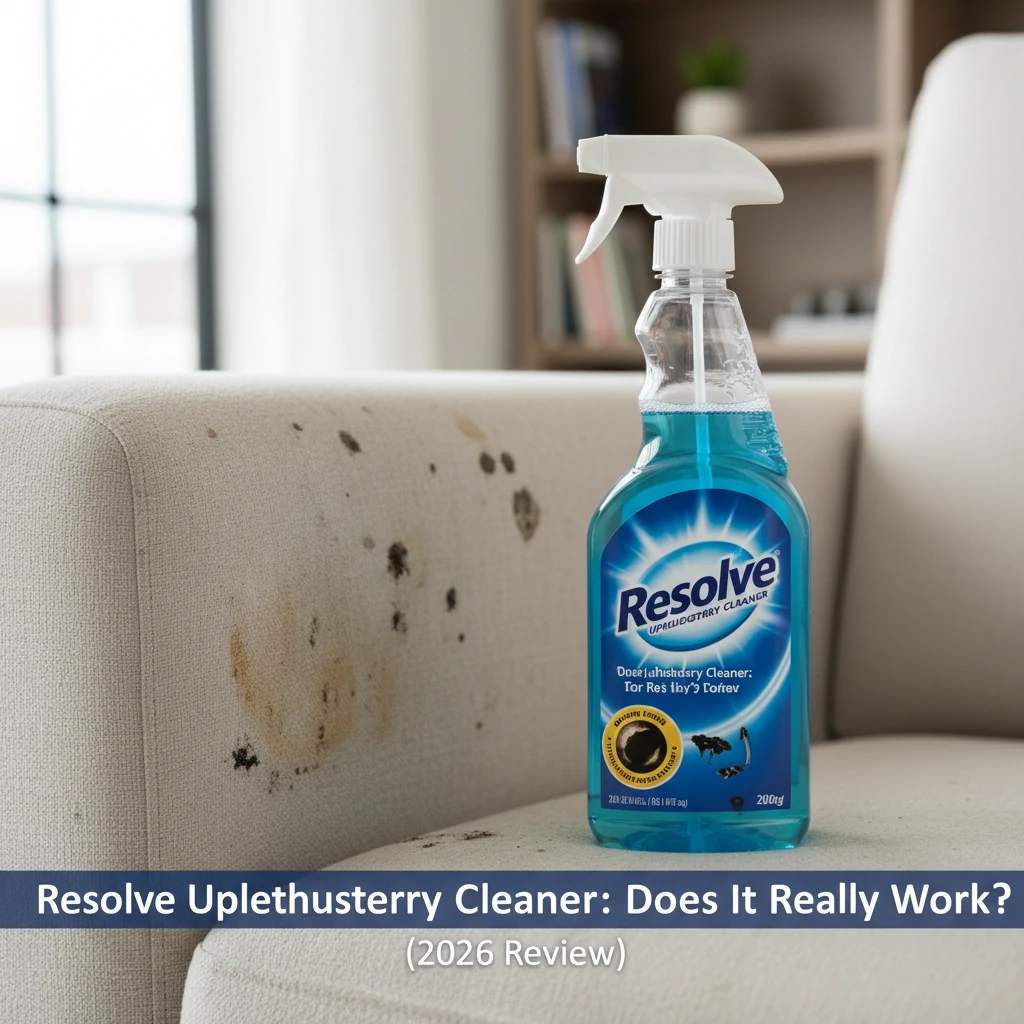
Resolve’s official product guidance is the source of truth for supported fabrics, pretreatment, dwell time and warnings. A cleaner can lift compatible soil; it cannot guarantee removal of every dye, grease mark, set stain or odor source.
Safe-use checklist
Remove loose debris and test a hidden area for color change or texture change. Use the smallest label-directed amount, work from the outside of a stain inward, and blot or extract rather than aggressively scrubbing. Ventilate until fully dry. Avoid leather, suede, electronics, headliners, seat belts and any surface excluded by the label or vehicle manufacturer. Do not mix with bleach, ammonia or another cleaner.
Topic-specific criteria: Stain treatment
| Decision point | Evidence to check | Why it matters |
|---|---|---|
| Primary match | fresh spill, set stain, dye transfer, dwell and extraction | The label and material guide define the safe use case |
| Process control | Amount, dilution, distance, dwell or attachment instructions | Improvisation can create residue or damage |
| Boundary | Do not mix cleaners or repeatedly soak padding, wiring or delicate upholstery. | Exclusions are part of the product decision |
| Outcome | label-compatible fabric cleaning, not permanent stain restoration | A maintenance result is not a repair or medical claim |
| Aftercare | Drying, rinsing, filter, storage or inspection guidance | Residual moisture and residue can create a second problem |
Workflow for this topic
- Identify the exact stain treatment condition and read the current manufacturer or vehicle instructions.
- Prepare the area: remove loose contamination, protect nearby controls, and gather clean, compatible tools.
- Test a small, inconspicuous section or low-risk setup. Wait for the relevant drying, cooling or operating interval.
- Use the minimum label-directed amount, exposure and mechanical action. Do not increase concentration, heat, pressure or dwell to force a result.
- Inspect for residue, rings, tackiness, finish change, leaks, unusual heat or interference with safety equipment.
- Clean, dry, rinse, replace or store the equipment exactly as directed, and record the exact model or formula if the result matters.
This section is for readers making a documented, cautious comparison. It is not evidence of independent hands-on testing, certification or universal performance. It is not appropriate for do not mix cleaners or repeatedly soak padding, wiring or delicate upholstery. Instead, seek the material maker, equipment maker or a qualified specialist when the problem reaches structural damage, electrical components, regulated waste or a persistent source.
When to escalate
If a stain spreads, dye transfers, or odor returns after a complete dry cycle, stop the home trial. The cause may be a damaged fiber, contaminated padding or an HVAC source. A specialist can identify that difference more reliably than repeated applications. This is also the point to protect the vehicle warranty and avoid making a repair harder.
Verdict
Resolve is a reasonable candidate for a cautious, label-compatible fabric-cleaning trial. This page has no controlled comparative test, so it should not promise a particular percentage of removal or a permanent odor cure. If staining reaches the padding or the fabric is damaged, professional cleaning or repair may be the better next step.
FAQs
Can I use Resolve on upholstery and carpet?
Only if the current label lists your material. Upholstery types differ, so test first.
How long should it stay wet?
Use the label’s stated dwell and drying instructions; excessive soaking can create new problems.
Does it remove old odors?
It may not reach the odor source in backing or padding. Identify and remove contamination, then dry thoroughly.
Can I use it on leather?
Not unless the current product directions and leather maker explicitly allow it.